Shell Script Security: Structural Limitations and Vulnerabilities of shc (Encryption, Compiler, Obfuscation)
shc is the most widely known shell script protection tool.
It works by wrapping a shell script in C source code and compiling it into a binary, which keeps the source code from being exposed.
However, because shc is structurally dependent on the system shell, it’s vulnerable to OS-level logging/hooking attacks.
A binary built with shc runs the shell script by passing it to the system shell (e.g., /bin/sh) for execution.
So all you have to do is monitor the moment the arguments are passed to the system shell, and you can easily capture the shell script.
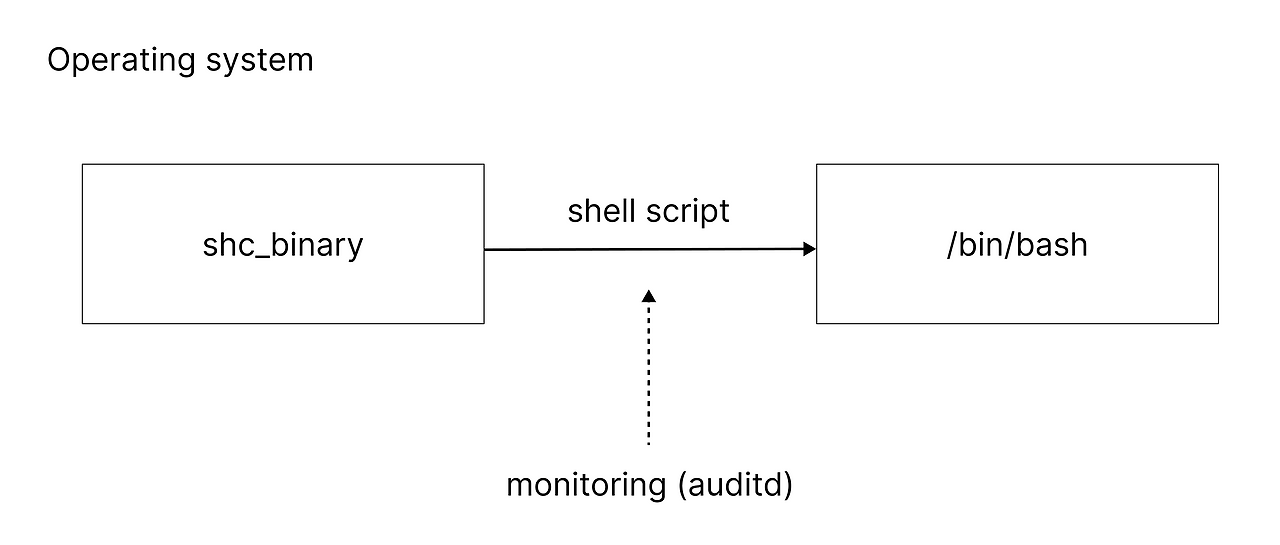
Let’s actually test this and confirm the vulnerability.
Test Environment
The following shell script was tested on Ubuntu 24.04.
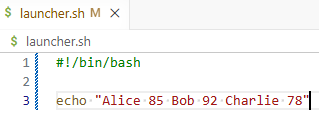
Build the binary at maximum security level as shown below.
shc -Uf launcher.sh -o shc_binary
Test Method
# Install auditd
sudo apt install auditd -y

# Register monitoring rule
sudo auditctl -a exit,always -F arch=b64 -S execve

# Run the shc binary
./shc_binary

# Check logs
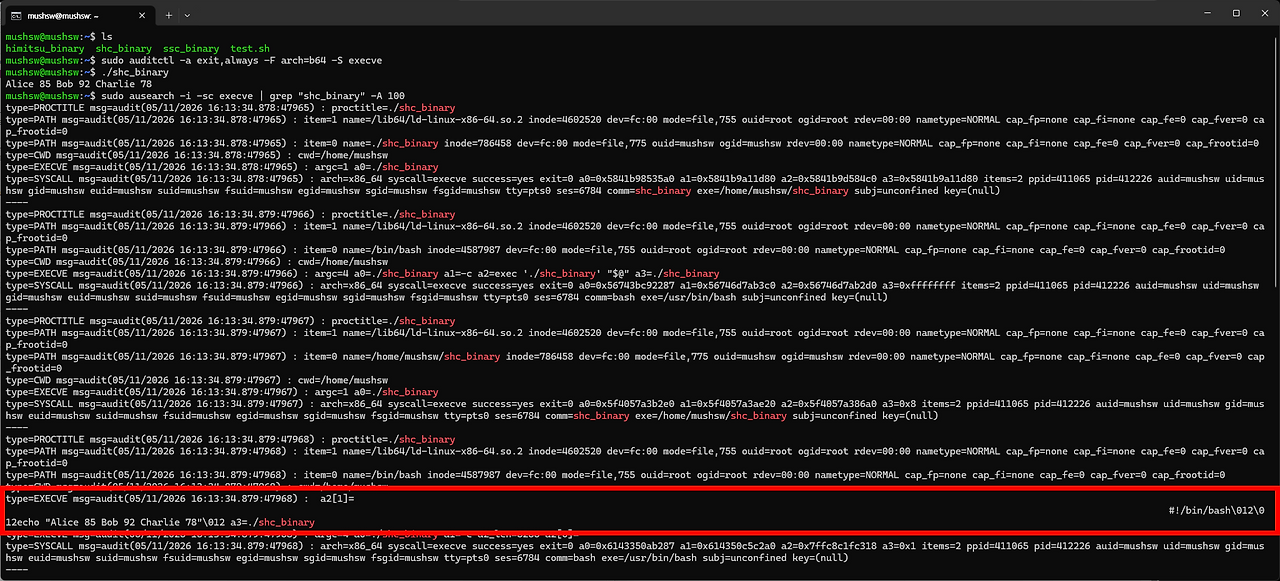
sudo ausearch -i -sc execve | grep "shc_binary" -A 100
As shown in the red box in the image below, using auditd (an OS-level monitoring tool) makes it trivially easy to capture the shell script.
Solution
You need to use a protection tool that doesn’t depend on the system shell.
Any tool built on a structure that relies on the system shell is fundamentally unable to defend against OS-level logging/hooking attacks like the one shown above.
There are protection tools out there such as ssc and HimitsuShell.
But ssc also has a critical structural weakness.
I’ll cover that in the next post.